|
Portable
Rock Art
Bird-form and
Bird-Human-Form Sandstone Artifacts in
Australia
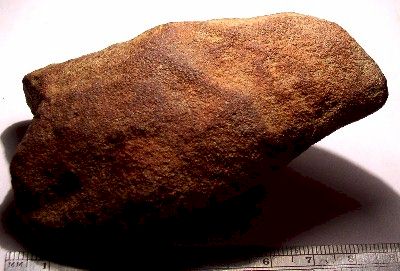
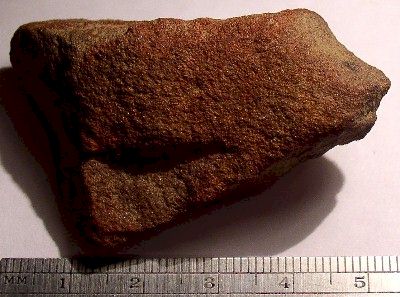
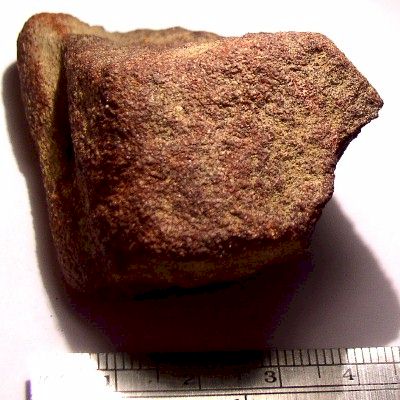
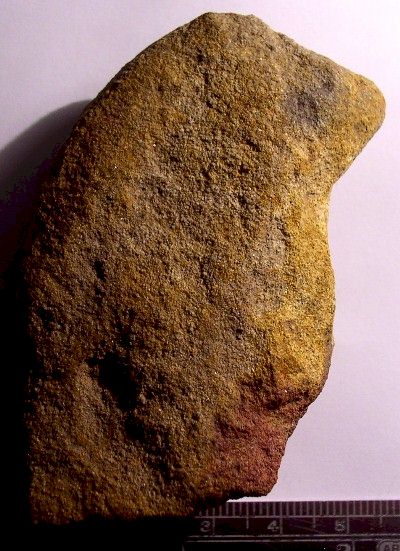
| These Figure Stones were collected
by the author in New South Wales in April 2006, in an area known to have
been inhabited for at least 40,000 years. They were all
near-surface finds, many of them from dirt roads graded through the
bushland to a depth of roughly 60 cm (2'). Improbable as it may seem, the similarities of the
images and their incorporated motifs to those at the 33GU218 site in Ohio are
unmistakable. These figures also closely resemble
Palaeolithic artifact material from Europe, suggesting
the possibility that a symbology of quite ancient and primal
origin propagated over a long period of time across most of the planet. Given
Australia's geographical isolation from the rest of the world,
these finds were not really expected - but there they were... |
____________________
____________________
|
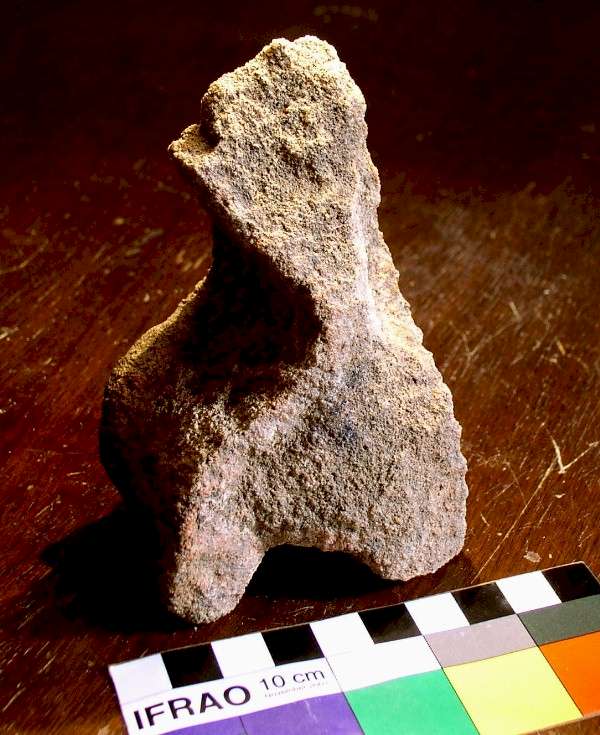
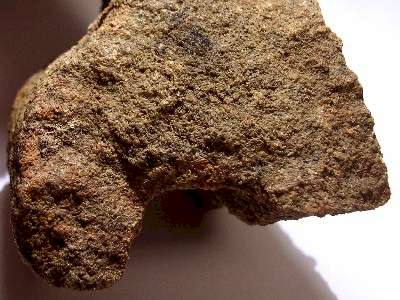
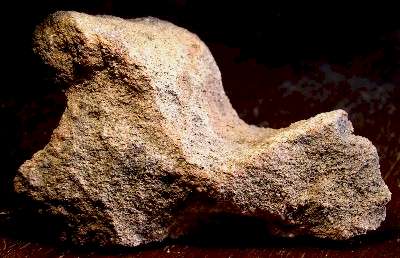
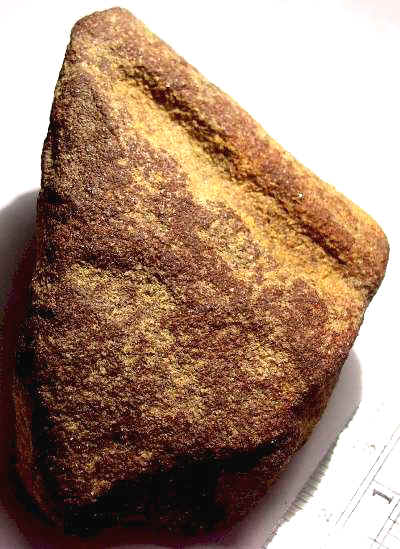
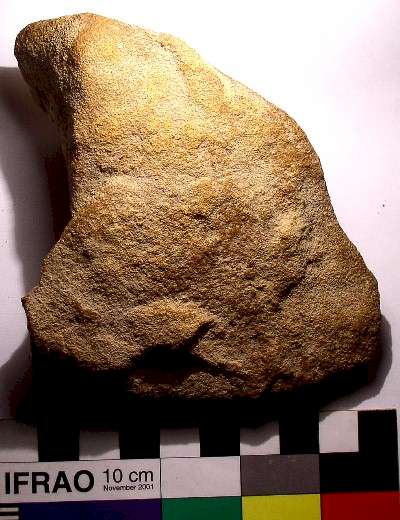
Two photos
above: The figure from additional perspectives. |
| The common theme
(badly weathered) of a human-like face (left profile) emerging from the mouth of a
crested
zoomorphic figure. |
|
  |
|
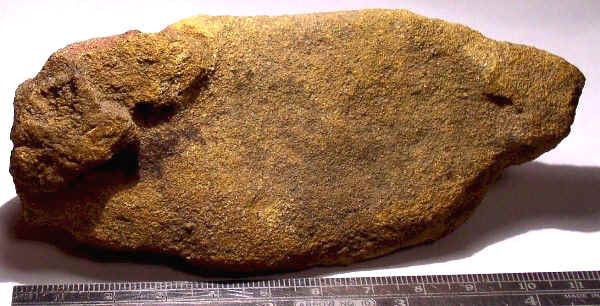
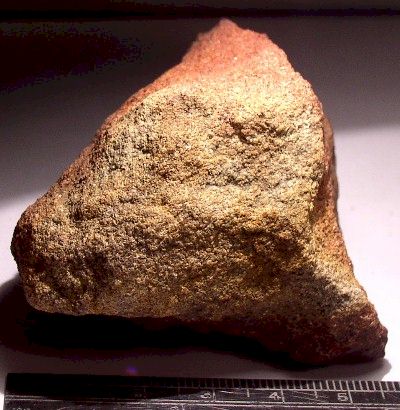
The flat back
surface of the standing figure, covered with a layer of red
ochre. |
|


|
|
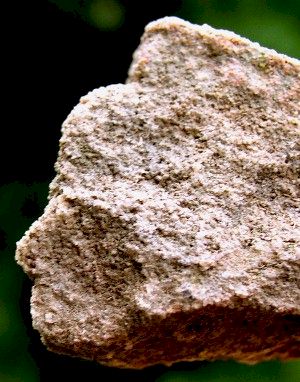
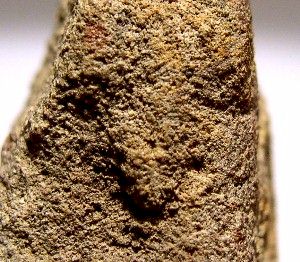
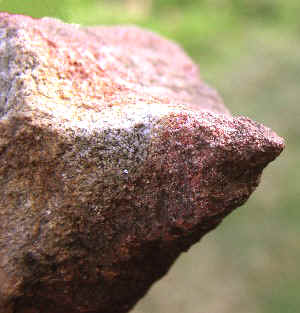
Close-ups of the red ochre, a
paste-like material quite distinct from the sandstone onto which
it is layered. At the laboratories of NSL Analytical
Services in Cleveland, Ohio, this was determined by SEM/XRF
analysis to consist of iron oxide, aluminum
oxide, silicon, carbon, and potassium, while the sandstone is (not surprisingly)
mainly silicon. |
____________________
____________________
|
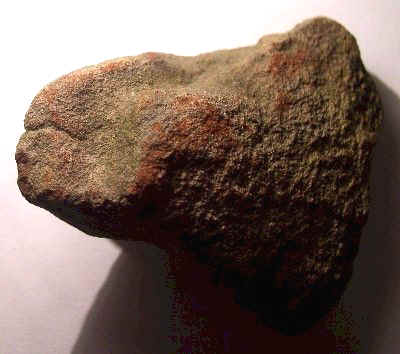
Below:
Bird and bird-human figures. It
is interesting and hardly surprising that bird imagery is widespread also in
Australian Aboriginal cave art. |
____________________
____________________
____________________
____________________
____________________
____________________
|

|
|
The circular indentation on this
piece has been assessed by a doctorate-level geology professor
and petrologist as almost certainly artificial. And note
the distinct eye, nose, and mouth at the left end of the figure.
|
___________________
____________________
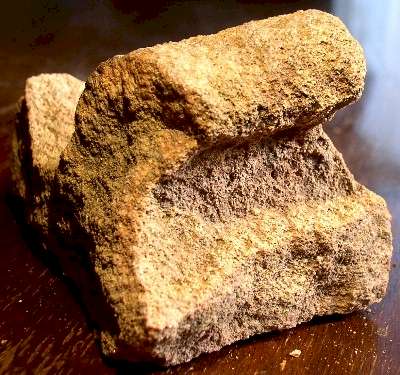
| Four views of the same
artifact. Note the carved grooves on two sides (top two
photos), directly
opposite each other. These have likewise
been assessed by a doctorate-level geology professor
and petrologist as quite probably artificial.
|
____________________
____________________
____________________
____________________
| Length 6 cm (2.4").
The features are weathered, but this bird figure exhibits the
motif very common in the 33GU218 material, a quasi-human face
emerging from the mouth of the bird. Below, at the top
of the rear edge of the stone, is the also very common frontal
figure of one creature sending forth another one from its
mouth (image width 1 cm (0.4"). Note that this
figure also incorporates the common theme of one
eye open, one eye shut. |
____________________
____________________
____________________
____________________
|
A classic "janiform"
figure - a face at each end. |
____________________
____________________
|
Another
two-faced image - animal left, bird right. |
____________________
____________________
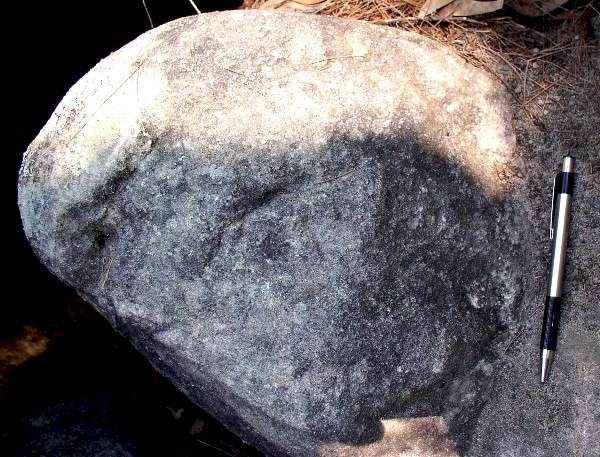
| Human face carved
protruding from a large boulder, with a zoomorphic figure facing
right over the head.
(This was left in situ, obviously.) |
____________________
____________________
| In 2011 this author was
contacted by Leanne Egan, who had been collecting apparent Figure Stones
in NSW's Snowy Mountains region. Sure enough, many of these
Incorporate
the characteristic bird and bird-human imagery with the classic themes: |
|

|
| An excellent sandstone piece in
the form of a bird with a humanlike face (left end), and a
larger anthropomorphic face emerging egg-like
from its posterior, altogether a classic janiform. |
|


|
|
Another
bird-human combination. |
 |
| An upright bird in
limestone(?). Note the anatomically appropriate eye on
each side - reflectional symmetry, a recognized hallmark of
human agency. |
|
Top
of Page
| Click your browser's
"Back" button to return to the point from
which you entered this page. |
HOME

|
|