|
The Dave
Gillilan Cache
Pickaway
County, Ohio
| In 2005 Dave
Gillilan, a house builder and farmer, contacted this author to
report finding artifact material like that shown elsewhere on this
website. The fact that he was seeing the same morphology
and incorporated imagery in his lithic material was interesting but not surprising or remarkable considering the many photos of this that had already been
contributed by other visitors. In October 2005 Dave took some of his
finds to Columbia, South Carolina, where this author was attending the
"Clovis in the Southeast" conference (including Topper,
etc.). Close inspection revealed that the morphology and
imagery in these were indeed essentially the same as in the
Day's Knob (33GU218) artifacts, although generally of
more refined workmanship.
In May 2006 this author
visited Dave at his home to photograph the material. In
the meantime, Dave had found, just below the surface of a
crawlspace in a house he was building, the
material shown on this page at about 1.5 m (5') beneath the
surface of rural terrain that was undisturbed below a plow zone
of about 20 cm (8"). Within glacial till (clay), the artifacts had been
placed in a horizontal layer of creek sand that was not parallel
to the sloping contour of the terrain. Most of them were like those viewed in
October,
but accompanied in direct context by a cache of flint, quartz,
and calcedony points, blades, and scrapers that have since been
professionally characterized as Late Archaic and/or Early
Woodland, from very roughly 2000 to 4000 years BP. These
identifiably "Indian" objects seem to offer some hope of gaining
professional attention to the material as a
whole, but complicating things a bit, and rather intriguingly, in direct
context were clearly manmade objects of glass,
iron (radiocarbon dated), and concrete
incorporating the simple bird and bird-human imagery characteristic of
very old Native American artifact material. This could (or
should) become interesting...
There was no professional
interest in assisting with or even witnessing the retrieval of
this material, and it is most unfortunate that, as a result, its original
context and its removal were not properly documented or
photographed.
To demonstrate the important
"replicability" factor, and simply as a matter of
interest, some of the artifacts shown here are accompanied by
references to similar ones at the 33GU218 site. |
--------------------
--------------------
|
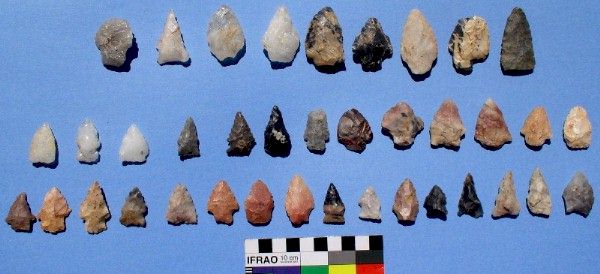
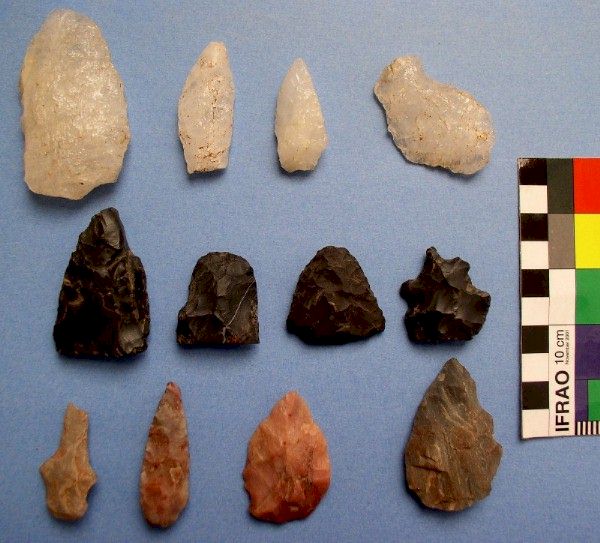
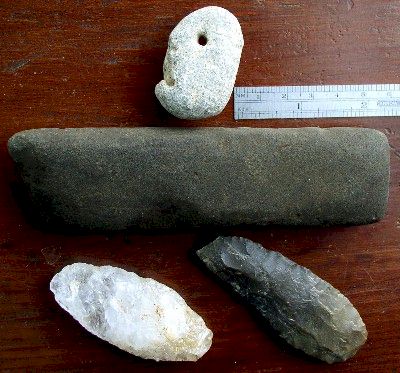
Above:
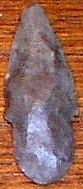
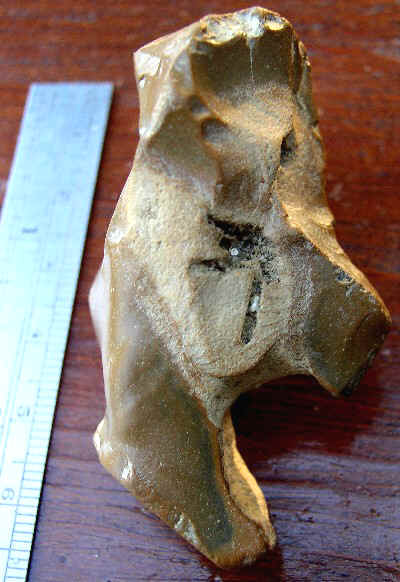
Some of the flint, quartz, and chalcedony artifacts. |
--------------------
--------------------
|
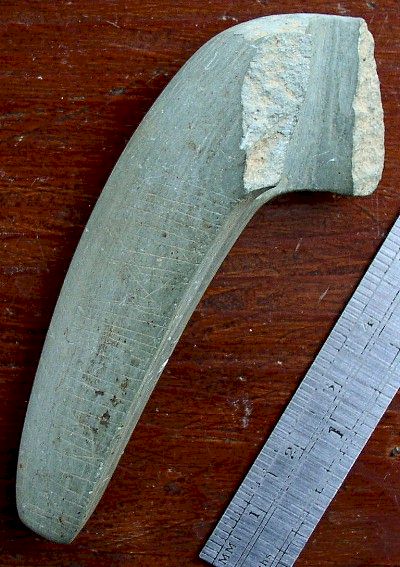
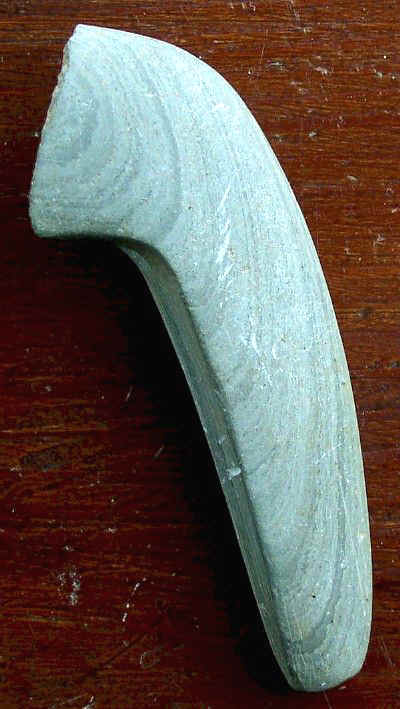
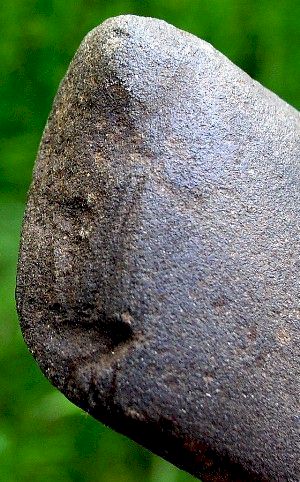
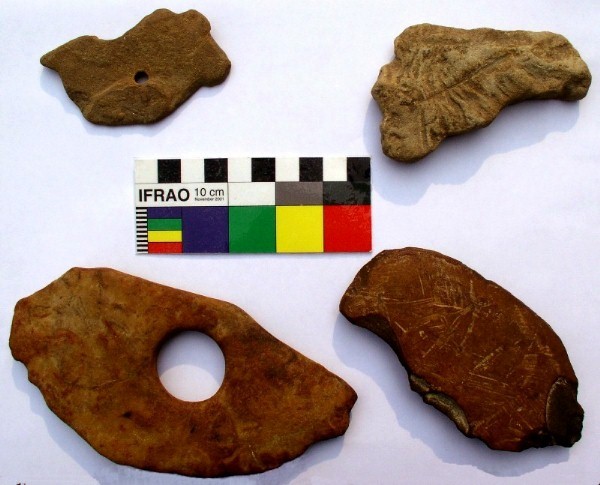
Half of a
banded slate bannerstone. |
|
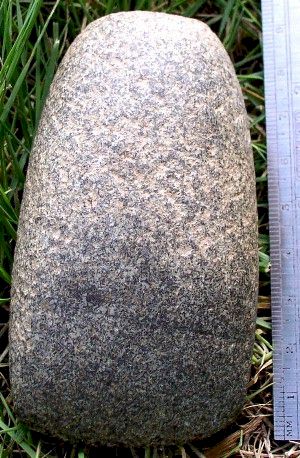
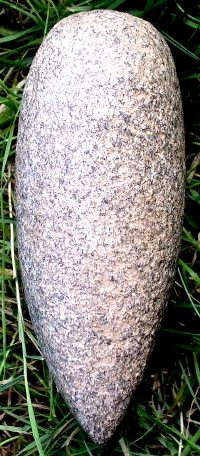
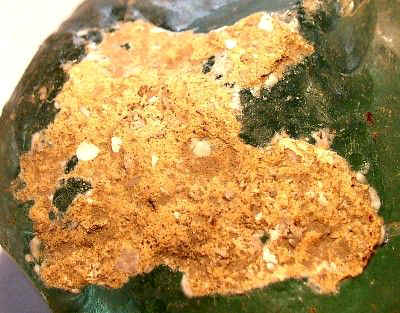
Miscellaneous
objects, including an apparent abrading stone. |
|
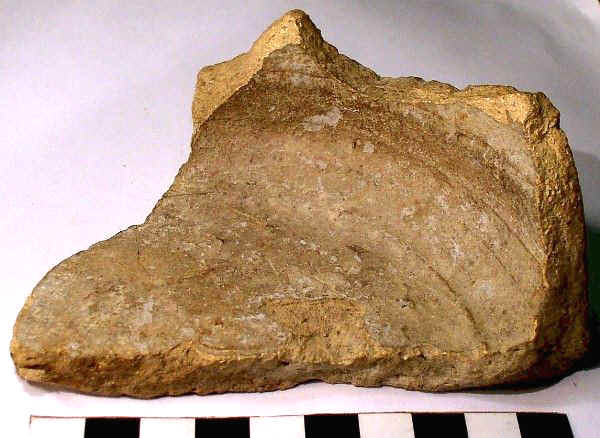
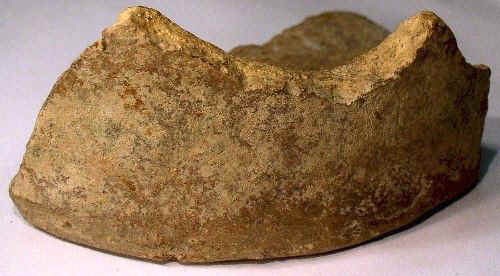
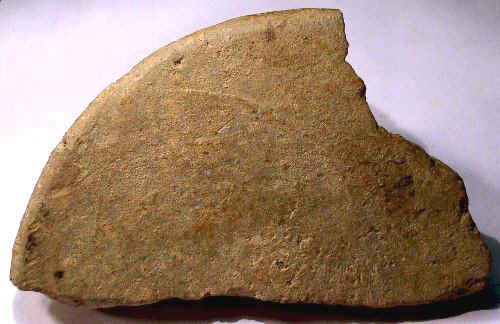
A fragment of a
thick-walled ceramic vessel tentatively identified as
dating from roughly 2500-3000 years BP.
|
|
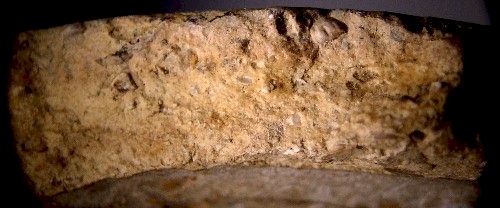
A close-up
showing the fine-to-medium grit temper. |
|
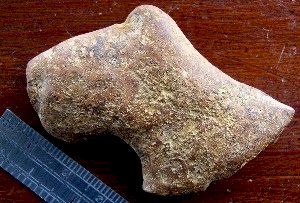
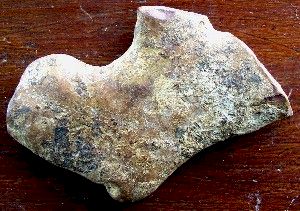
Bird-form artifacts, including two
pendants. The pendants are perfectly balanced when suspended
from a cord. The large one does not look balanced in
two-dimensional view, but its thickness (hence weight
distribution) varies to place the balance point in the hole.
|
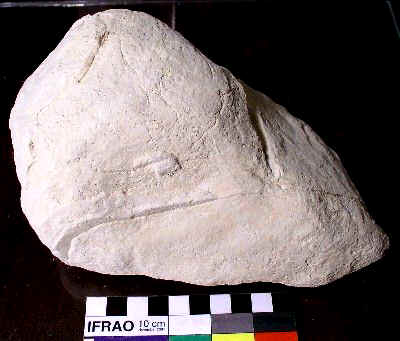
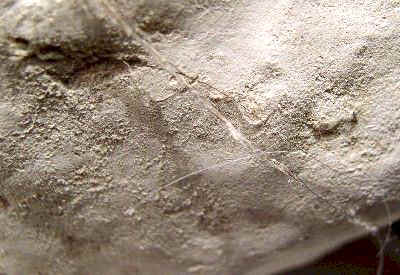
| Looped and intertwined
hairs, apparently from various animal species, partially embedded in a coating of powdered lime(?) on the surface of a
rock - for whatever reason. Almost certainly not a natural
occurrence.
|
|
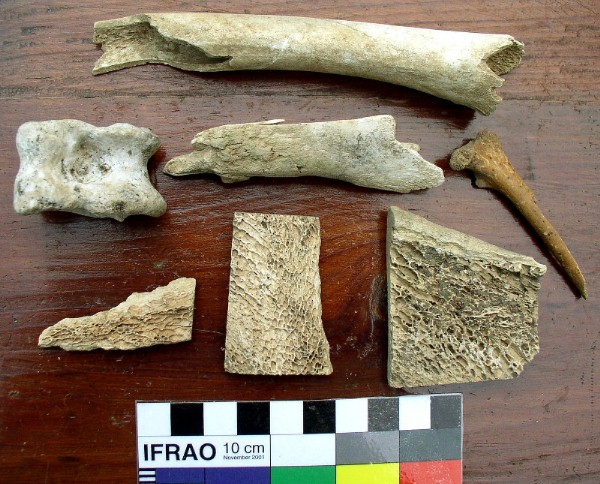
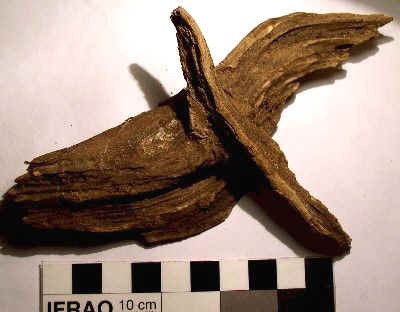
Bones, most or
all of
them human-modified.
|
|
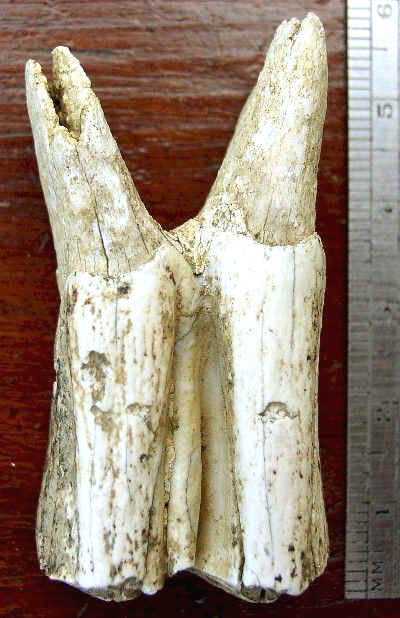
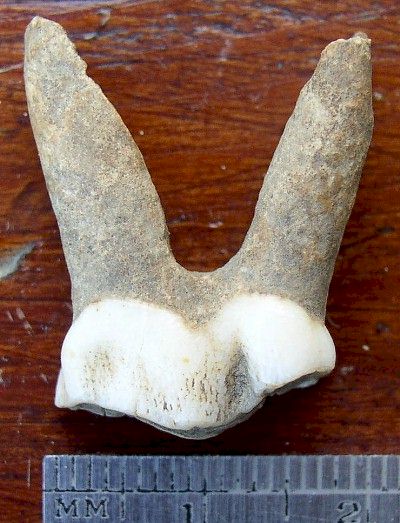
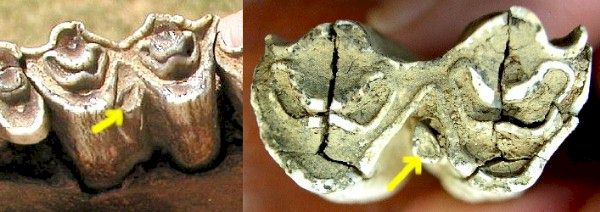
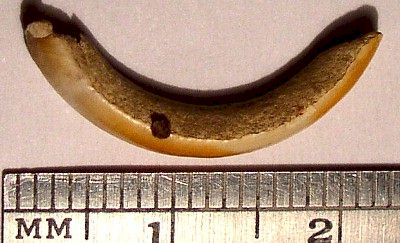
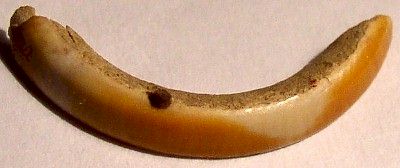
Teeth, the larger
of which is probably a bison molar. |
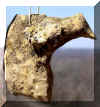
| Below: On the left, a
molar in a Pleistocene-age bison jaw from Oklahoma, and right,
the large tooth shown above. The arrows point to an "isolated
stylid", a distinguishing feature of bison
molars.
|
|
Simple
zoo-anthropomorphic clay figures.
|
__________________ Maize
__________________
|
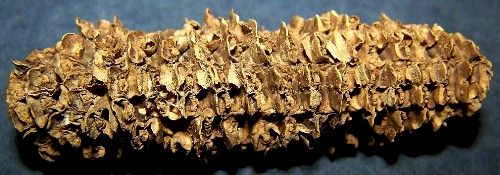
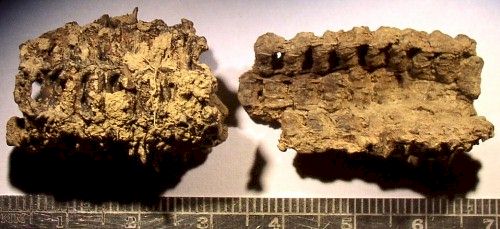
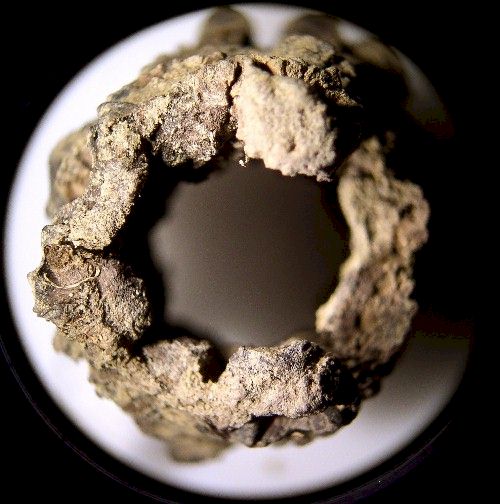
These maize cobs
are about 2 cm (0.8") in diameter. They are
eight-ranked with two kernel rows per rank - sixteen kernel rows
around the circumference, apparently unusual for this cob size
in this geographical area. Judging from the remaining
shell casings and the cupule width, the kernels were about 3 mm
x 1.5 mm. |
__________________ Glass
__________________
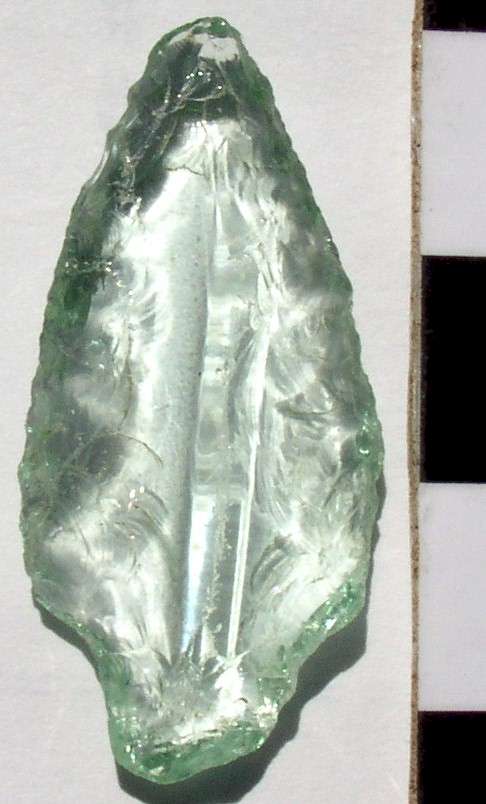
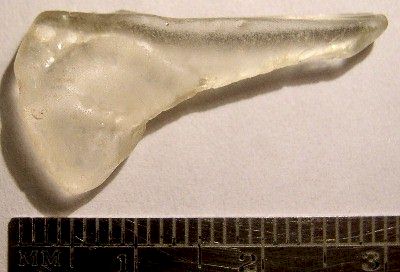
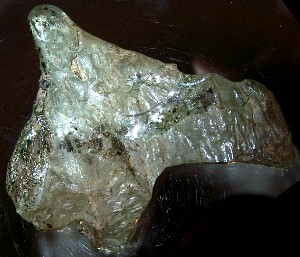
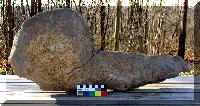
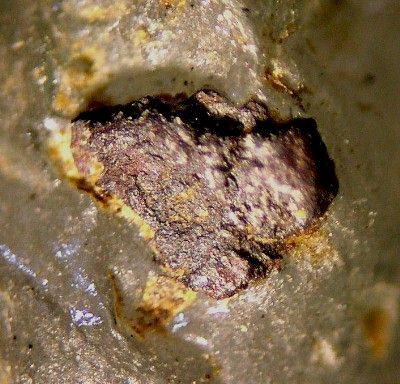
| This glass point was part of the point
and blade cache that is apparently of Late Archaic to Early
Woodland age. It seems
out of place, to say the least, but it is the author's opinion
that Dave would have not "planted" it. Also,
there were numerous artifacts (a few shown below) and
byproducts in direct context that strongly suggest a simple early
glass manufacturing technology. (For what it's
worth, note the resemblance to the early Adena Cresap
point.)
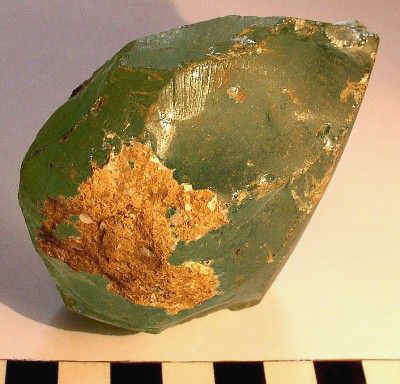
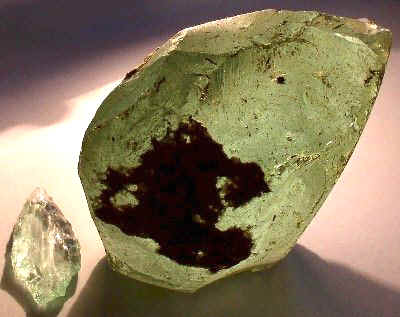
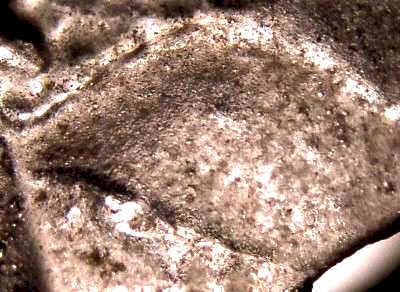
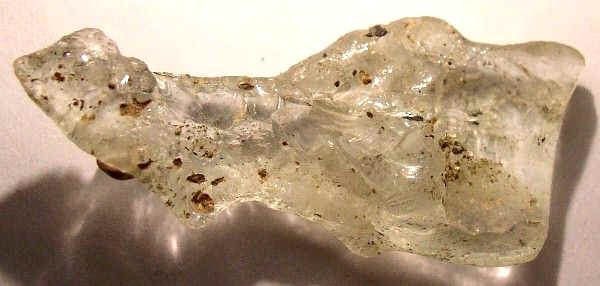
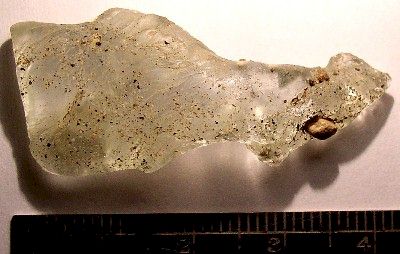
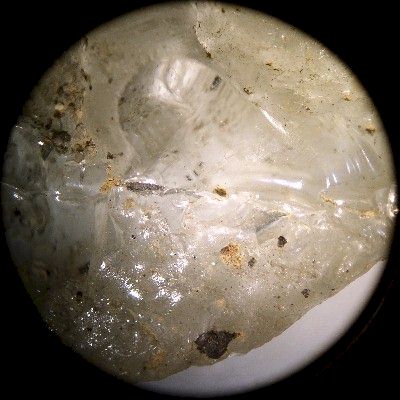
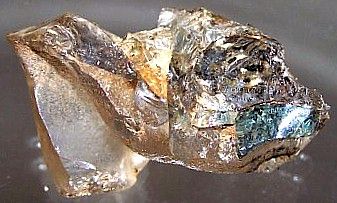
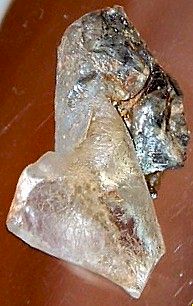
Three photos below: A
glass object appearing in context, similar in color to
the point. Note the raw material, sand and lime, fused with its surface.
|
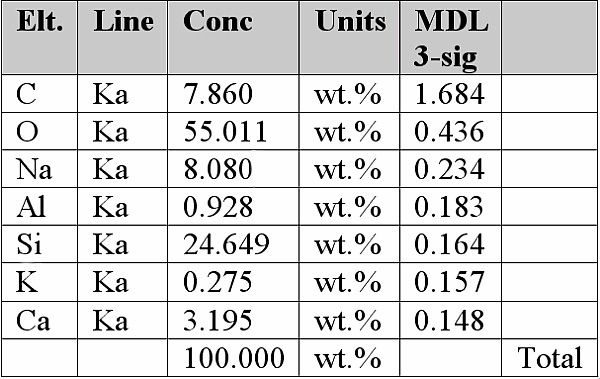
| A compositional analysis of
the glass point with SEM/XRF at NSL Analytical Services' laboratories
in Cleveland, Ohio revealed this content, all elements
occurring naturally in the area of the find: |
|
|
|
A small glass
object with apparently beveled edges. |
| A close-up of the raised area
on the object, with the light source behind it.
This appears to be an intentionally formed bird head in raised
relief, likely formed with a small pointed implement while the
glass was still hot. |
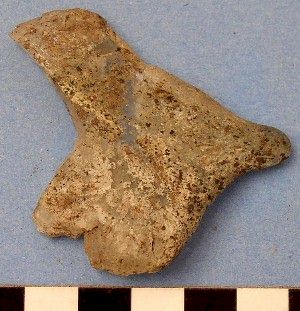
| A two-faced
polymorphic/polyiconic
glass figure, both a bird head looking to the right
(note the eye and the demarcation of upper and lower beak), and overall
seemingly a flying bird profile (head upper left).
Below, the opposite side of the figure with backlighting:
|
|
Close-ups of
iron inclusions in the above piece.
|
| Another interesting glass
figure, 3 cm (1.25") . The blue-green inclusion is physically separate,
but fused with the rest of the piece.
Below, the piece
from two more perspectives:
|
_____________ Iron
and Concrete _____________
|
An
anthropomorphic figure of
lime-based cement/concrete.
|
|
Out of place as this may seem,
one must consider that a well developed and refined natural concrete technology was employed
by the Maya in Mexico 2000 years ago.
|
|
The composition of the cement in the concrete artifacts among Dave's finds
has been analyzed by expert petrographer Bernard
Erlin and determined to be a mixture of natural
limestone and clay, as opposed to
the synthetic cement developed in the early 1800s and
almost always used currently.
|
|

|
|
Above and
below, an iron zoo-anthropomorphic figure. |
|
Length 89 mm (3.5"),
weight 131 g (4.62 oz). |
|

|
|

|
|
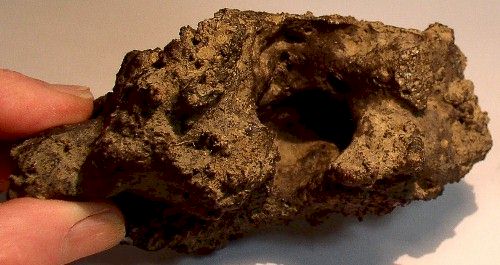
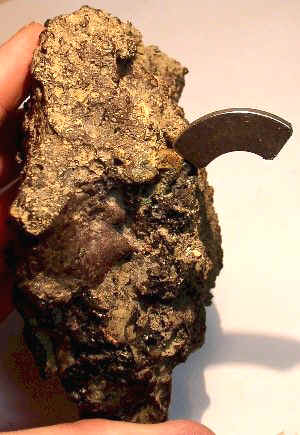
Below,
artifacts composed of both iron and concrete: |
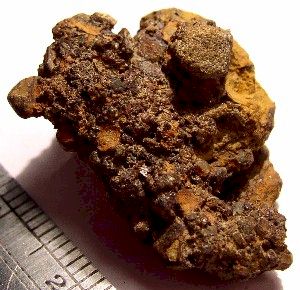
| Left, another iron-spitting
head. Right, a small (3 mm diameter)
iron protrusion from the back of the head, also in classic
zoomorphic form. Note the extension of the
figure-from-the-mouth (the simple two-eyes-and-a-mouth) theme in
the protrusion. |
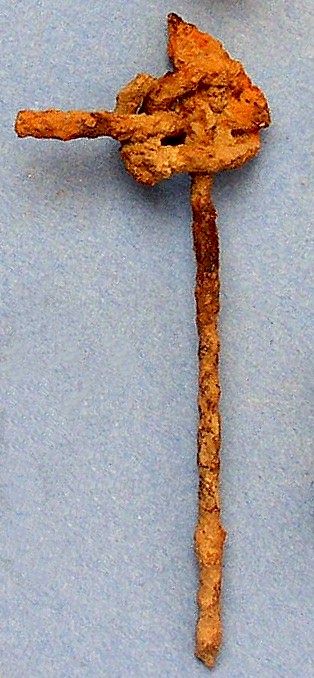
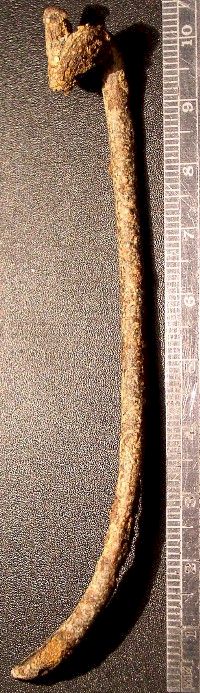
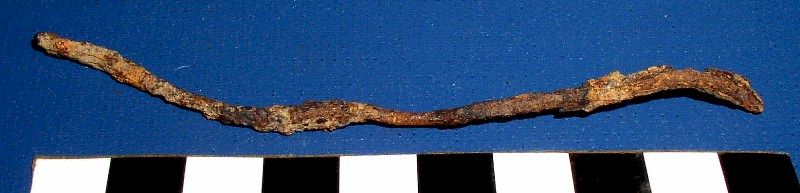
| Formed iron rods possibly
intended (or earlier actually used) for the attachment of
anthropomorphic concrete heads as on the two pieces shown
above these photos. (The rightmost two of the photos
directly above are of the same rod.) The iron in its
current state is not at all flexible, indicating that it
likely was formed while still hot. |
|
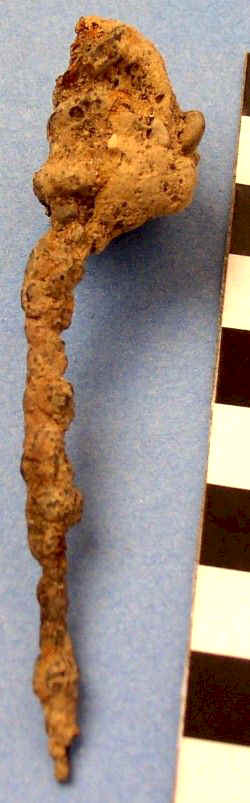
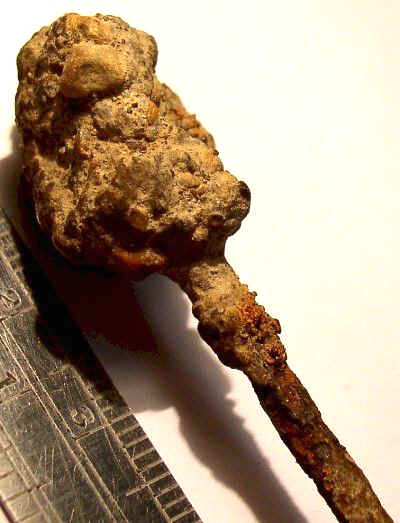
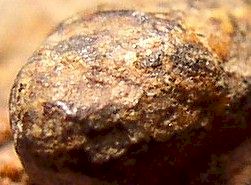
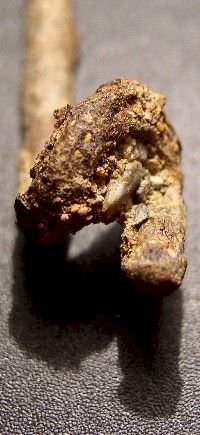
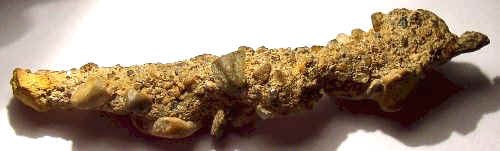
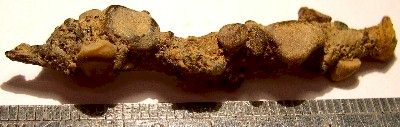
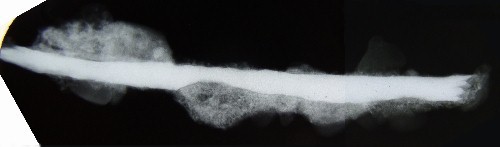
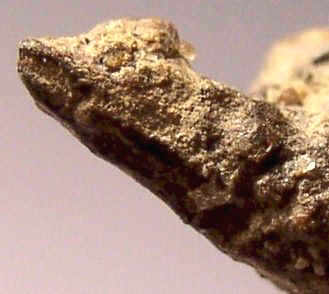
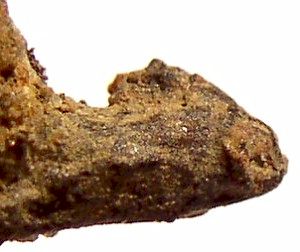
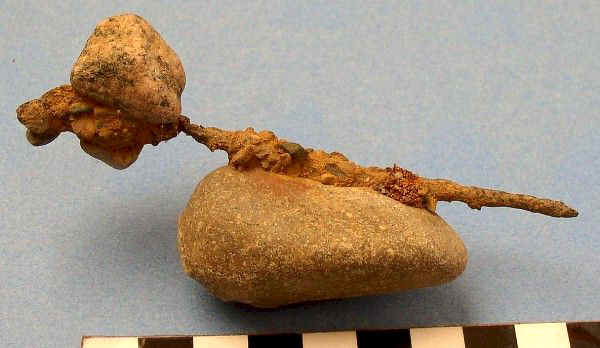
An iron rod overlain with
concrete and stones. Length 5 cm (2"). |
|
Below:
Close-ups
of the tip, which incorporates quasi-bird-like figures. |
|
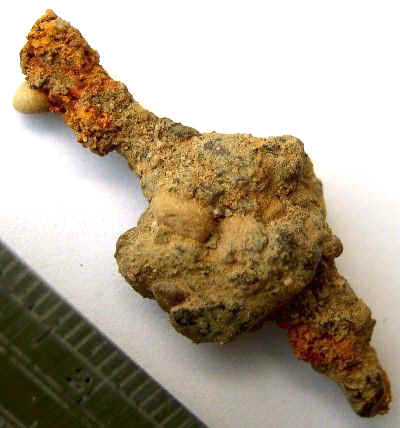
Above, two iron
and concrete figures. |
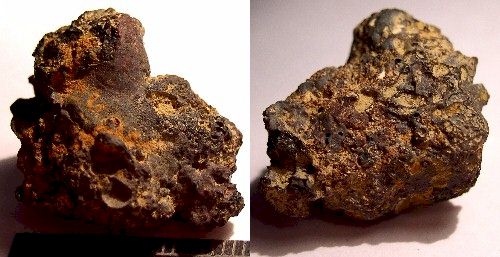
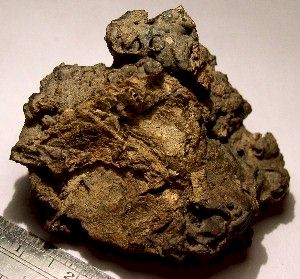
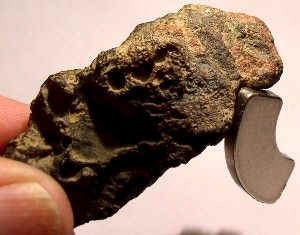
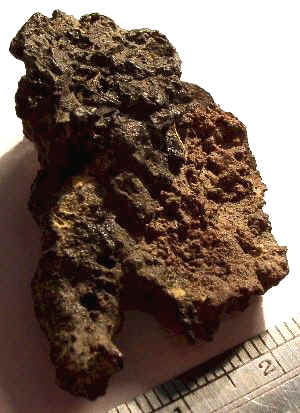
| Below: Iron slag pieces,
all magnetic, but not uniformly. Some of these have been
formed into the typical zoomorphic or quasi-anthropomorphic figures. |
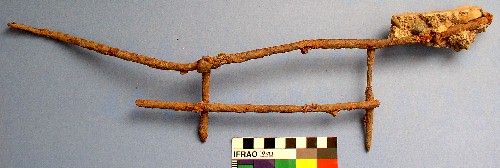
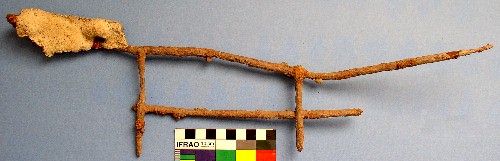
| Below: Strange indeed - a
large iron and
concrete abstractly zoomorphic figure. The rods are not welded, but
seem to have been fused while still hot. The end of the
tail is hammered flat. |
|
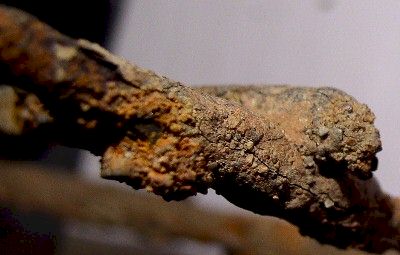
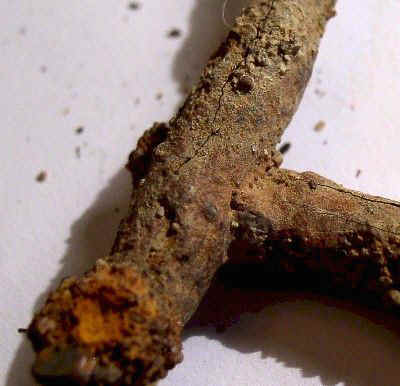
Below are two
close-ups of rod joints:
|
| Iron smelting
- like glassmaking - seems a stretch, but this was done thousands of years ago
in Europe, Asia, and Africa. Is it reasonable to assume that the people here in North America, who did a
lot of
experimenting with fire, were any less intelligent and resourceful?
Possible evidence of prehistoric
iron smelting has long been recognized in Ohio, as at the well
known Spruce
Hill walled earthworks site in Ross County, close to the
location of Dave Gillilan's finds. It is fairly common in
the vicinity of Hopewell earthworks, but summarily dismissed by
archaeologists as an "intrusive feature" on the
patronizing assumption that "Indians" were not capable of this.
Even the few earlier (exclusively avocational) investigators of the
evidence in Ohio
who have recognized this as convincing, (e.g., Arlington Mallery and William
Conner) have
insisted it must be the work of Vikings (had to
have been white people, right?).
|
Recent
Related Development
|
Prehistoric
Native American Lead Smelting in Indiana? |
|
The
Mann Site |
On 3
January 2011 National Public Radio's news program All
Things Considered aired a feature on recent
discoveries at the Mann Hopewell earthworks site in
southwestern Indiana, with the statement that one of
these "could rewrite history books".
"...scientists are starting tests on what looks
like evidence of lead smelting, a practice that, until
now, was only seen in North America after the arrival of
the French, 1,000 years after the Hopewell Tradition."
Apparently this the first time that
profes- sional
archaeologists are recognizing the idea of metal ore smelting by
prehistoric Native Americans as plausible. Daring,
to say the least. It will
be interesting to see how this develops... |
|
It is noteworthy that none of
the iron and slag artifacts in Dave Gillilan's cache have any
apparent utilitarian function. They seem to be of an iconographic nature, and it appears
that this was the main or only purpose of smelting technology
here. (And it is interesting that in ancient Siberia
and Africa, iron smelting was largely the domain of shamans
[ref. Mircea Eliade in his encyclopedic work Shamanism].)
Of course there is the
awkward fact that Native Americans are not recorded as engaging
in iron smelting at the time of European contact. This
author's tentative hypothesis is that this time-consuming and
labor-intensive technology with no perceived practical application was abandoned
(and subsequently forgotten) around the time of cultural decline
corresponding to the transition from the Middle to the Late Woodland
Period, when
survival-related concerns became paramount.
The anomalous and
"problematic" material in Dave Gillilan's finds will
be scien- tifically evaluated as time and other resources
permit, leading to whatever conclusions may result. This
is, of course, a strictly avocational project, as professional
and academic archaeologists seem, for the most part, to have
little interest in things beyond the realm of what they have
been taught to expect. But things are whatever they are, and the
scientific method dictates that unexpected phenomena be examined
and evaluated in terms of actual physical evidence rather than
summarily dismissed because they do not fit within an
established paradigm.
|
__________
Radiocarbon Dating __________
|
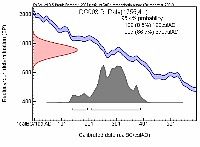
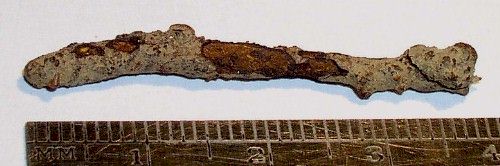
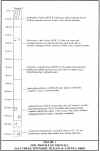
The carbon content of the
iron artifact shown above (presumably from charcoal fuel used
in the smelting process) was radiocarbon dated at the
University of Arizona's AMS laboratory in 2007. The
carbon content of the tested sample varied from one segment to
another, one showing 0.007%, another 2.2%, and the rest in the
range of 0.04% to 0.08% - altogether much less homogeneous
than what one would expect in recently manufactured iron.
Readings from three separate samples with sufficient carbon indicate
about a 90% probability of origin somewhere between 209 and
783 AD, the two more closely corresponding readings indicating
209 to 551 AD, alto- gether coinciding more or less with the
Middle Woodland Period. Click on the image below to see
charts of the readings calibrated against the IntCal04
atmospheric curve using Oxford University's OxCal software:
While
this is quite interesting, suggesting that the iron
is roughly contemporaneous with the
temporally
diagnostic Native American
artifacts in direct context, one can say with certainty only
that these are the numbers returned by the radiocarbon
dating process. At best, carbon dating is a tricky business with many pitfalls, and
the dating of iron is even more so than that of other
materials. Altogether, there remains a lot of
time-consuming and expensive research to be done.
|
__________
Compositional Analysis __________
| In
testing the hypothesis that the iron is prehistoric in origin,
it was deemed neces- sary to determine whether or not it
contains elements characteristic of recent alloying
processes. A sample (shown below) like the one dated and
from direct context in the find, was analyzed by EDS
(energy-dispersive spectroscopy) and WDS (wavelength dispersive
spectroscopy) at Yale University. |
| The
carbon content of a fragment of the specimen, determined after
annealing and cooling, was less than 0.1%. From EDS
and WDS, the non-metallic content of another fragment of this
was found to be primarily manganese at 0.3%, with smaller
components of silicon and sulfur. No distinctly modern
alloying content was detected.
For
comparison, this sample of southern Ohio hematite ("bog
ore") from 33GU218 was analyzed by ICP-MS (inductively coupled plasma
mass spectrometry) at NSL Analytical Services' laboratories in Cleveland: |
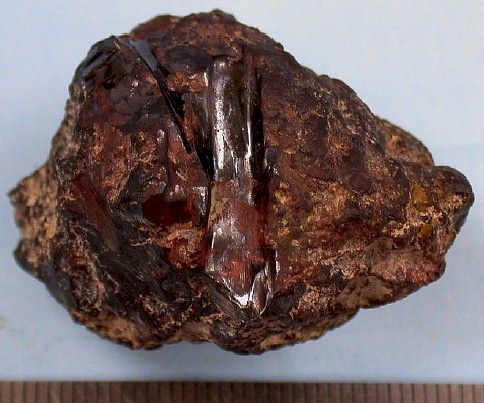 |
| This
material was determined to be more than 10% iron (no surprise), with
aluminum, calcium, and silicon each comprising between 1% and
5%, and manganese being between 0.5% and 1% of the whole.
Altogether, melting this ore would likely produce an iron with
the composition of the metal artifacts shown above. A fire
raised to a temperature of around 1000 degrees Celsius would be
required, but, as mentioned above, this was achieved with
primitive technology over two thousand years ago in Europe,
Asia, and Africa. Why not in North America? |
__________________
__________________
| An interesting and certainly
exasperating aspect of this project is the fact that
Dave Gillilan repeatedly asked Ohio's state archaeologists
to at least take a look at his material as
he was removing it from where it appeared. (He had no
choice but to remove it, as he was committed to finishing and
selling the house beneath which the artifacts had appeared;
this was an urgent matter of financial necessity.) His
pleas were ignored. Upon being shown photographs
of the material taken by this author after its removal, the
state archaeologists declared it to be typical of a nineteenth
century landfill (trash dump), and of no archaeological
interest. It was not meaningful to them that the
artifacts included points and blades, groundstone tools, half
a bannerstone, and pottery fragments, all professionally
assessed as being from before 2000 years BP, and absolutely
nothing definitively identifiable as culturally of the
historical era. (There is no record of there ever having
been a landfill at this location, and in laying utility lines
for the property, Dave had dug up thousands of cubic feet of
ground, seeing nothing suggesting a trash dump.)
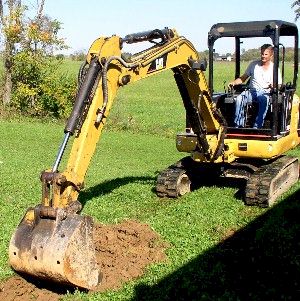
In October 2006, Dave and
this author, at their own expense, engaged the services of
a professional geomorphologist recommended by the Ohio
Historical Society to assess the stratigraphy immediately
adjacent to the find area.
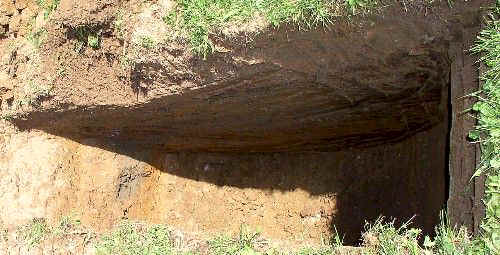
The geomorphologist's report
states "With
the exception of the uppermost 20-cm thick plow zone, there is
no evidence of prehistoric or historic disturbance of the
sediments revealed in the soil profile of the trench."
The state archaeologists' response to this: "There must
be a landfill there somewhere. Just keep looking for
it." Apparently this is their understanding of scientific
inquiry - start with an a priori assumption based on
received wisdom, and work back through the evidence for as long as is necessary
to make this support the assumption. (It is worth noting
that these are the same purported experts that contemptuously dismissed
as a geofact the now well known and professionally verified sandstone
turtle head sculpture unearthed by Dirk Morgan near the
Fort Ancient site, this being only one of many such
displays of self-assured incompetence.) Needless to say,
there is a bit of a communication problem here, given this
author's own approach of carefully assessing all the available
evidence, however unexpected or anomalous, and working from
this to hypotheses that can be either confirmed or
disconfirmed on
their own merits. |
|
Related Development
|
|
|
Click image for details.
|
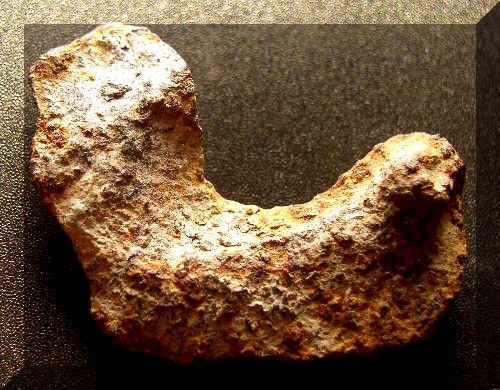
Iron
artifacts of characteristically prehistoric morphology
and likely a product of direct-reduction smelting have
been surfacing at the apparently Early-to-Middle
Woodland site 33GU218 in Guernsey County,
Ohio. This is currently under investigation. |
|
__________________
__________________
|